Tactical Pointers, Shooting Pointers, Psychological Pointers

Roots of Performance Pressure: Fear of Failure – Part 1

Živa Dvoršak, Sonja Benčina

Feb 6, 2026

When we step onto the firing line and the match begins, a lot happens in the body. Heart rate changes, breathing shortens, muscles tighten, and attention narrows. For many shooters, these reactions appear suddenly – even though nothing external has changed yet.

In Part 1 and Part 2 of our S.O.S. Practical Pointers series, we explored quick interventions for moments when pressure hits right now. In this series, we go deeper. Instead of asking how to calm the body, we look at the roots of performance pressure in sports shooting. We also share practical training examples – ways to deliberately meet these fears in training, learn how they show up for us, and gradually develop strategies and adjustments that work under pressure.

Fear of Failure

One of the most common roots of performance pressure is the fear of failure.
In shooting, this fear is rarely just about points or rankings. More often, it is about losing something that already feels earned: a good series, a strong start, a sense of control, or the image of ourselves as “solid” or “reliable” shooters.

When fear of failure is active, the shot stops being neutral. It carries meaning. The nervous system shifts into protection mode – breathing changes, muscle tone increases, and attention shifts toward perceived threat. Many shooters then try to solve the situation cognitively. Instead of trusting a well-trained process, they start thinking their way through the shot: forcing focus, rushing timing, correcting movements, or trying to “make it happen.” What follows is a shift from automatic, skill-based execution to conscious control – a response that feels productive in the moment but often interferes with precision and consistency.

From Protection to Execution

Precision is not built by avoiding mistakes, but by learning how to keep executing when mistakes and tension are present. Failure itself is unavoidable in sport – and trying to eliminate it only strengthens the need to control. Instead, the task in training is to recognize fear as it appears, allow it to be present, and shift away from mental problem-solving back into the body. A deeper breath, a return to physical cues, and a conscious decision to trust a trained process help the nervous system re-engage skills that already exist. The body holds memory and can still execute shots under higher tension – if we allow it to.

Fear of failure is often described as the fear of losing something – points, status, or opportunity. While some approaches attempt to train this by adding punishment, we focus on a different strategy: creating meaningful stakes without turning fear itself into the motivator.

With this in mind, the following training situations are designed to deliberately expose shooters to moments of potential failure and to practice responding with awareness rather than automatic control.

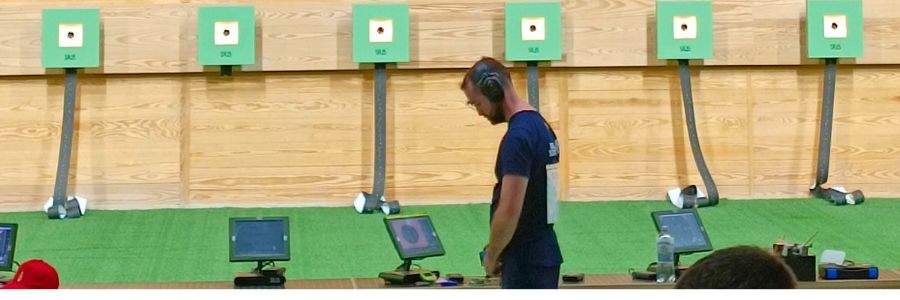
Bosnian sport shooter Boris Filipovac standing alone on the shooting line, seemingly deep in thought, perhaps battling performance pressure, with a line of targets in the background.

Drill 1: Good Series, Bad Series

Shoot a series of 10 shots. The result of the next series must be the same or higher – if it is not, you must do 10 minutes of dry fire. If it is, you go on to the next series of 10 shots. The drill puts pressure on fighting for a series score while the “punishment” is very neutral: it only means technical work. This will reduce the fear of losing a series and normalise the feeling of continuing to work after a bad series.

Drill 2: The Famous Last Shot

Shoot a series of 9 shots. Then set a goal: shot number 10 must be above my average shot. If you pass, you can continue with the next series of 9 shots, with shot number 10 being the decisive shot. If you fail to score above your average shot, you can only continue shooting your 9-shot series after doing 10 minutes of dry fire. This drill puts pressure on your last shot and trains your brain to make decisive actions without panic. Again, failure only means technical work – continuation of work and not loss. If you are a shooter who instead struggles with firing their first shot, turn this drill upside-down!

Drill 3: Make Your Bad Shot

For every series of 10 shots, you must make one bad shot deliberately. You can decide where you want to send it, for example: for my 5th shot in the series, I want to hit an 8.5 right. This drill combines shading or sight correction or both with battling the fear of losing. You experience shooting well without the possibility of winning, teaching your mind that performance does not equal outcome.

The arrow that hits the bull’s-eye is the result of a hundred misses.

Buddhist saying
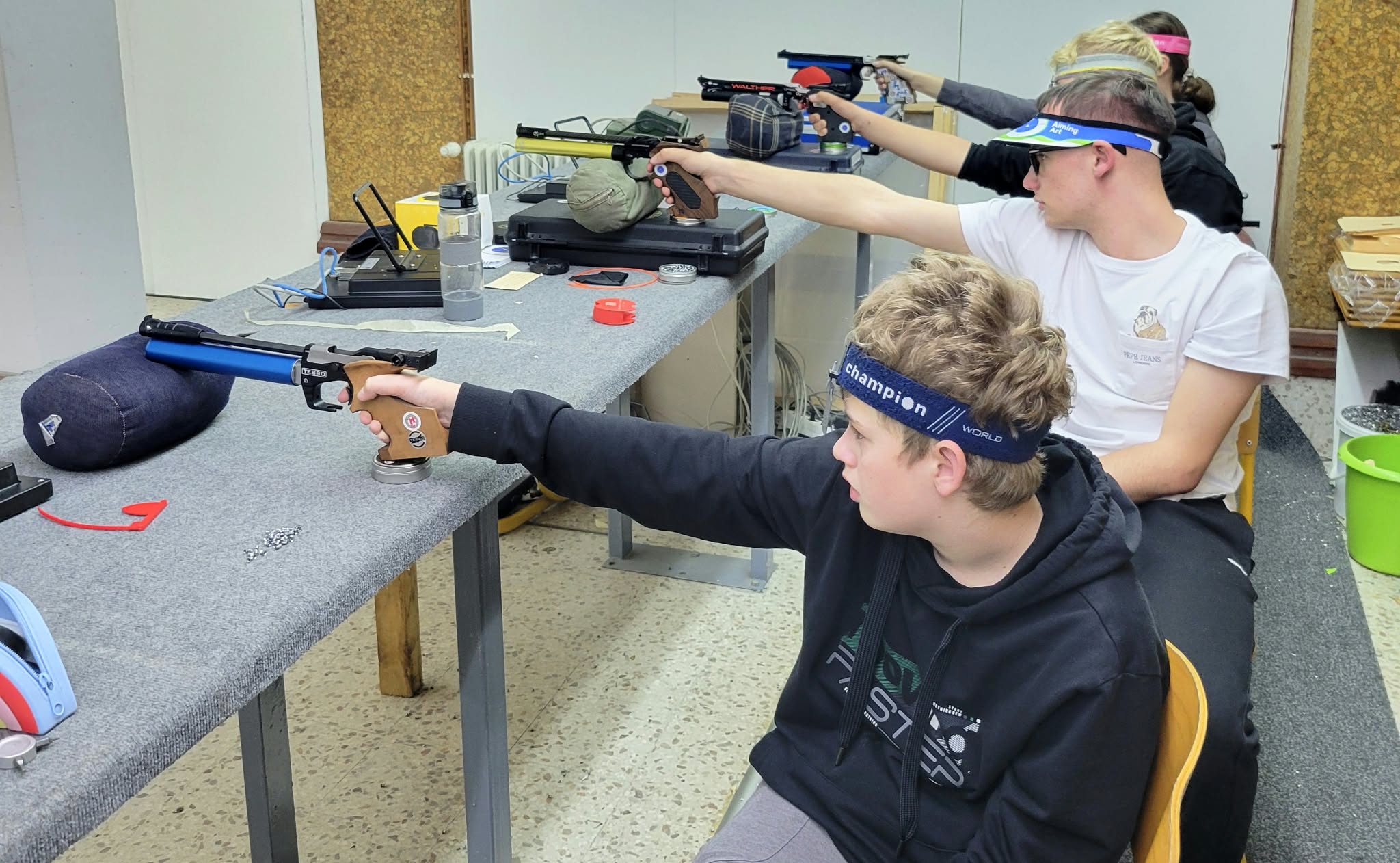
Seeing failure as an opportunity for improvement makes it more tolerable, and it can actually help you relax and discover ways to push beyond your current level of performance. At Aiming Art, we approach shooting proactively rather than reactively – trusting our training and physical cues instead of trying to micromanage every shot mentally. The lesson here is to redirect failure and setbacks so that they work for you, not against you.

Shooting Notes are just one example of such an approach. Ready-made forms encourage solution-focused shooting analysis, helping shooters learn from mistakes rather than dwell on them. Setting realistic, challenging, short-range goals further builds courage, confidence, motivation, and commitment – and gives a tangible sense of control over performance.

Learning to work with failure builds resilience and trust in your skills. But pressure does not disappear once we shoot well. When success accumulates, expectations rise – and suddenly there is something to protect in the other direction. In Part 2, we will explore the fear of success – how gaining something can create just as much pressure as losing it, and how training can prepare us to handle success with the same awareness and intention. 

Share this post

Leave a Comment

Your email address will not be published. Required fields are marked *

More Recent Pointers

Fear of success and performance pressure in shooting – and how training exposure helps shooters keep executing when things go well.

Fear of failure and performance pressure in shooting – and how training exposure helps shooters stay with their process.

Joint Mobility

What is joint mobility and why is it important for shooters?

Aiming art background on the side of the web page on the bottom
Cover of the slovenian strelski zvezek notebook on an opened notebook

Make every practice count by writing your personal shooting analysis. Monitor your progress and see yourself improve!

Aiming art background on the side of the web page on the bottom

Be among the first to receive our Practical Pointers and best offers,
a few times per month!

Shopping Cart