Why Shooting Notes are your most valuable shooting companion if you’re ready to make every training session count.
Tactical Pointers, Shooting Pointers
3 More SOS Exits – The Power of Metaphors
Živa Dvoršak
Nov 1, 2025
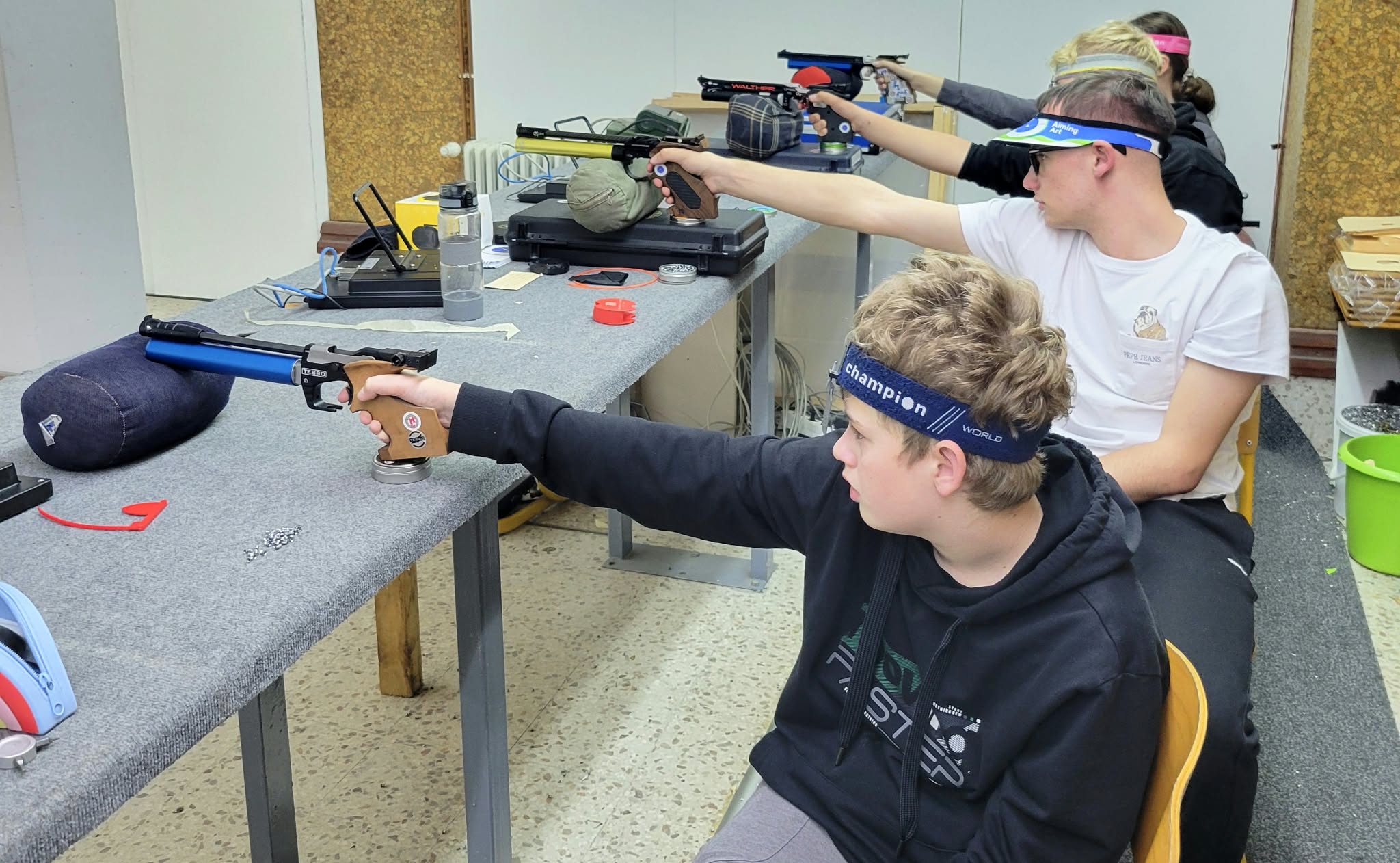
At the beginning of October, we hosted the sixth series of Aiming Art Academy weekends for young shooters in Slovenia. In addition to regular shooting practice, we set aside short slots for individual talks with each athlete.
During one of these conversations, a young shooter gave us something to think about. He explained how he manages to calm himself down and refocus during competitions when distractions or tension take over.
Since our first blog post on 3 SOS Exits was written some time ago, this talk was the perfect reason to add three more – this time from a slightly different perspective. Let me introduce you to the power of metaphors.
What Are Metaphors and Why Do They Work?
In psychology, metaphors are not just poetic phrases. They are mental shortcuts that translate complex feelings into images or sensations we can easily understand and act upon. Sports psychologists have long studied how athletes use mental imagery – visual, auditory, or kinaesthetic representations – to regulate focus and emotions. Some researchers even found that metaphors help athletes embody desired states more quickly than verbal instructions alone.
Think about it this way: when you tell yourself “Stay calm”, your brain hears an abstract order. But when you imagine turning down the volume of the outside world or stepping into a calm bubble, your mind receives a vivid, sensory message. It’s like giving your nervous system a clear script to follow.
That’s the essence of metaphorical SOS Exits – quick, creative mental switches that help you regain control when things get noisy, stressful, or overwhelming in competition.
SOS Exit No. 1: Visual Metaphor – Switch Off the Outside World
The young shooter told us that he sometimes feels tense when people stand behind him during a match – as if every move he makes is being watched and judged. What helps him most is that he imagines himself as a movie character who can instantly “zoom out” from the chaos around him.
You’ve probably seen that cinematic trick – when the camera blurs the background, people disappear from the view, the sound fades, and everything slows down until only the main character remains sharp and focused. This is a simple visual metaphor for redirecting attention. When you control the “camera,” you decide what’s in focus. The audience fades into the background, not because they’ve disappeared, but because your mind has stopped filming them.
Try it yourself the next time you feel everyone’s eyes on you. Picture turning the lens away from the crowd and back to the task; let the background blur, the lights soften, and watch the scene become private again with only the target remaining in frame.
SOS Exit No. 2: Auditory Metaphor – Turn Down the Volume
Sometimes, distractions are not visual but auditory. The hall is buzzing, someone’s talking, maybe there’s movement or announcements over the speaker. Here, the young athlete’s trick was brilliant: He imagines an old-school radio knob in his mind and gently turns it down until the background chatter fades away.
You can use the same idea in many ways. For example, picture yourself stepping out of a loud party into a quiet restroom, where sound suddenly drops by half and your thoughts become audible again. Or imagine sliding down a “volume bar” like the one on your phone, watching the external noise shrink to a low hum.
This metaphor works because it gives you agency. You’re not a victim of the noise – you’re the one holding the dial. It’s simple, quick, and surprisingly effective, because your mind interprets that imagined action as a signal: I’m back in control.
Exit No. 3: Emotional Metaphor – Reframe the Rush
Let’s face it: some distractions don’t come from outside. They come from within.
The moment the judge calls Start! your body floods with adrenaline. Your pulse speeds up, your hands tingle, your breath shortens. That same physical reaction can feel like excitement – or like panic. What makes the difference? The meaning you attach to it.
Therefore, when adrenaline hits, quickly link that feeling to a positive metaphor instead of fear. Remind yourself of other moments when your body felt the same – but for a joyful reason. For example, that pulse of excitement as the rollercoaster begins to climb, the spark just before opening a long-awaited gift, or even that quiet thrill right before pressing the trigger in practice – when focus feels effortless.
Physiologically, excitement and anxiety are almost identical. The only real difference lies in interpretation. By connecting your sensations with a positive metaphor – “I’m ready for take-off”, “I’m siiting at the top of the rollercoaster” – you shift your emotional state from fear to anticipation. The energy remains the same, but now it works for you rather than against you.


Making Metaphors Work for You
Metaphors are not magic tricks. They are bridges between your body and your mind.
When you visualise, your brain activates neural pathways similar to those activated when you actually perform the movement or feel the sensation. That’s why metaphorical imagery can have real, measurable effects – on focus, heart rate, muscle tension, and even breathing rhythm. You’re literally rewriting the sensory script your body is following in that moment.
There are many techniques to prepare for competition: meditation, visualisation, breathing exercises, autogenic training, etc. All of them strengthen your mental stability before you step on the line. But none of them can completely erase the sudden wave of adrenaline when the judge says Start! That’s when your SOS Exits become essential.
Still, even the best SOS Exit won’t work unless it’s trained in advance. Just like you practice your technical routine, practice your mental exits, too. Use them during training sessions, small tournaments, or even daily tasks – so that when the real pressure comes, your brain already knows the path out. Create a list of several ones and write them down in your Shooting Notes. Because sometimes, staying focused doesn’t mean forcing silence or calmness. It simply means learning how to turn the noise into a story – and then rewriting it with the power of your own metaphors.
More Recent Pointers
Three metaphorical SOS Exits: quick, creative mental switches that help you regain control when things get noisy, stressful, or overwhelming in competition.
Season planning involves setting goals and writing an action plan.


Make every practice count by writing your personal shooting analysis. Monitor your progress and see yourself improve!


Be among the first to receive our Practical Pointers and best offers,
a few times per month!