Tactical Pointers, Shooting Pointers, Psychological Pointers

Roots of Performance Pressure: Fear of Success – Part 2

Živa Dvoršak

Mar 6, 2026

Performance pressure is often framed as something that appears when things go wrong. Misses accumulate, scores drop, and the body reacts. But pressure does not only emerge when we are at risk of failing. For many shooters, it appears just as strongly when things are going well.

Either as a potential loss (failing, dropping points, losing control) or a potential gain (winning, confirming a strong performance, meeting expectations), performance pressure emerges when the nervous system perceives that something meaningful is at stake. In both cases, these situations trigger the same protective response in the body – just in different directions – where the nervous system is responding not to what is happening now, but to what might happen next.

In Part 1, we explored how this pressure manifests as a fear of failure – the urge to protect against losing something. Here, we turn to the other side of the same mechanism: fear of success.

Fear of Success

Fear of success often shows up quietly. A strong start, a series above average, or a score that places us higher than expected suddenly creates something to protect. What was previously mere execution becomes loaded with meaning: Don’t ruin this. Keep it together. You’re going to mess this up.

Just as with the fear of failure, the nervous system here is responding less to the shot itself and more to what might happen next, moving once again into protection mode. Breathing changes, muscle tone increases, and attention narrows – not toward avoiding failure, but toward maintaining success. The shooter may start monitoring performance more closely, checking scores, or thinking ahead to outcomes that have not yet happened.

Instead of trusting the same process that produced the good shots, many shooters begin to interfere with it. Timing becomes cautious or forced, movements are subtly corrected, and the shot no longer unfolds naturally. What worked moments ago now feels fragile, as if it must be held together mentally.

From Forcing the Outcome to Staying with the Process

Just as failure cannot be controlled directly, success cannot be controlled directly either. The attempt to protect it only increases tension and pulls attention away from the body and into the mind. The task in training is therefore not to downplay success, but to learn how to continue executing when success is present. By recognising the protective response early – the urge to hold on, to monitor, to control – shooters can practice returning to physical cues, rhythm, and trusted routines.

Success does not require a different process; it requires the courage to keep using the same one.

Training situations that introduce something to gain, maintain, or live up to allow shooters to meet performance pressure in a deliberate and safe way. The aim is not to eliminate the fear of success, but to become familiar with it – to recognise how it shows up internally and to practice responding with awareness rather than interference.

The following drills place shooters in situations where something positive is already “on the line”: a good series, a strong starting point, or a result worth continuing. The task is not to protect success, but to learn how to keep executing through it

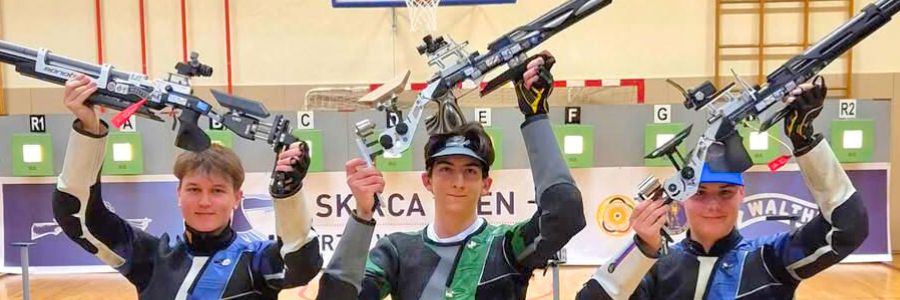
Slovenian junior sport shooters Gal Potrč, Maksimilijan Žarić, and Florjan Klemenčič celebrating a win.

Drill 1: Continue the Work

One way to expose fear of success in training is to continue shooting immediately after a strong series. After completing a normal 10-shot series, note whether the result is above your session average or a predefined score. If it is, move straight into the next one, using the same routine, rhythm, and technical focus. The task is not to protect the previous result, but to notice any urge to do so and to deliberately return attention to physical cues and execution.

Over time, this kind of observation helps shooters learn how fear of success shows up internally – how the urge to protect feels, when it appears, and what it pulls attention toward. By recognising these patterns in training, shooters are better prepared to respond when the same sensations arise in competition, using familiar physical cues rather than reacting automatically.

Drill 2: Chasing Success

Another approach is to simulate success at the start of a training session. Before shooting, write down a series score that represents a strong starting point – for example, the score you would have achieved in the first series. Place the paper in front of you and pretend that this series has already been shot. Your task is not to recreate or beat it, but to simply continue shooting the remaining series and finish strong

To increase the challenge, you can write down multiple strong series in advance – two, three, or even five – and continue shooting as if each one had already been completed. This allows you to simulate carrying success through the entire session. As the number of predefined series grows, subtle tension, heightened monitoring, or an urge to control execution may appear – early signs of fear of success. Observing when and how these sensations arise helps shooters recognise the pattern in competition and respond by returning attention to physical cues and routine, rather than trying to micromanage each shot mentally.

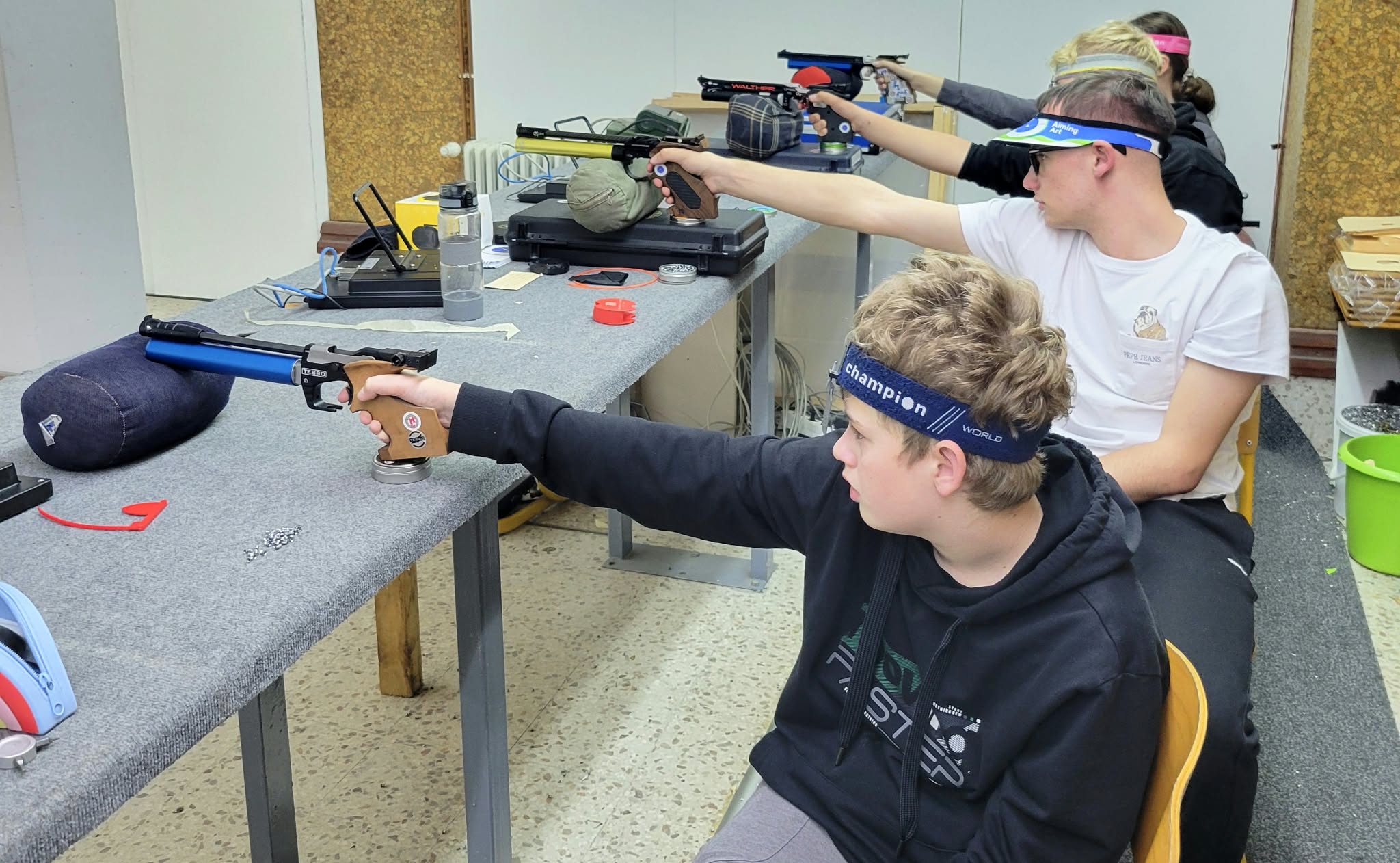
2 junior sport shooters during a match experiencing performance pressure

Drill 3: Confirm the Good Shot

The fear of success can also surface after a good shot. One way to work with this in training is to have a list (a print-out or a hand-written record) of reference shots from a previous training session or competition. During the exercise, the task is to “beat” these shots one by one. If the current shot meets or exceeds the result of the reference shot, you move on to the next one on the list. If it does not, dry-fire one shot before continuing.

The focus is not on reproducing the exact feeling of a good shot, but on allowing execution to happen again under raised expectations. Using the same or a different shot lists across sessions, shooters can observe how the urge to secure success shows up and how quickly they can return to physical cues and routine. Over time, the goal is to work through the list with fewer interruptions, learning to execute freely even when success becomes something to maintain.

Success becomes heavy when it turns into something we feel we must protect. The moment performance is measured only by outcome, the work tightens and joy quietly disappears. But excellence in shooting has never been about controlling results – it is about showing up fully to the process, again and again. Being excellent in the process is success in itself.

When attention returns to doing the work, outcomes tend to align as a consequence rather than a target. As success becomes visible, another layer of pressure often emerges: performing under the eyes and expectations of others. In Part 3, we will look at how recognition and social judgment shape performance – and how training can prepare us for that as well.

Share this post

Leave a Comment

Vaš e-naslov ne bo objavljen. * označuje zahtevana polja

More Recent Pointers

A practical guide on travelling with weapons.

Fear of social judgment and performance pressure in shooting – and how training exposure helps shooters stay with their process when others are watching.

Fear of success and performance pressure in shooting – and how training exposure helps shooters keep executing when things go well.

Aiming art background on the side of the web page on the bottom
Cover of the slovenian strelski zvezek notebook on an opened notebook

S pisanjem strelske analize naj vsak trening šteje. Beleži svoj napredek in opazuj svoje izboljšave.

Aiming art background on the side of the web page on the bottom

Bodi med prvimi, ki nekajkrat mesečno prejmejo Strelske namige
in posebne ponudbe!

Shopping Cart