Three common mistakes we keep seeing – and what to do instead.
Strelski namigi
3 Common Shooting Mistakes
Živa Dvoršak
Oct 2, 2026
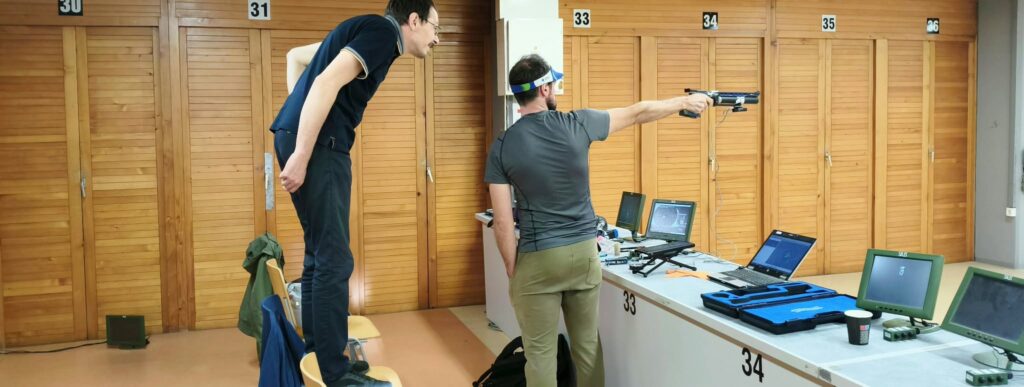
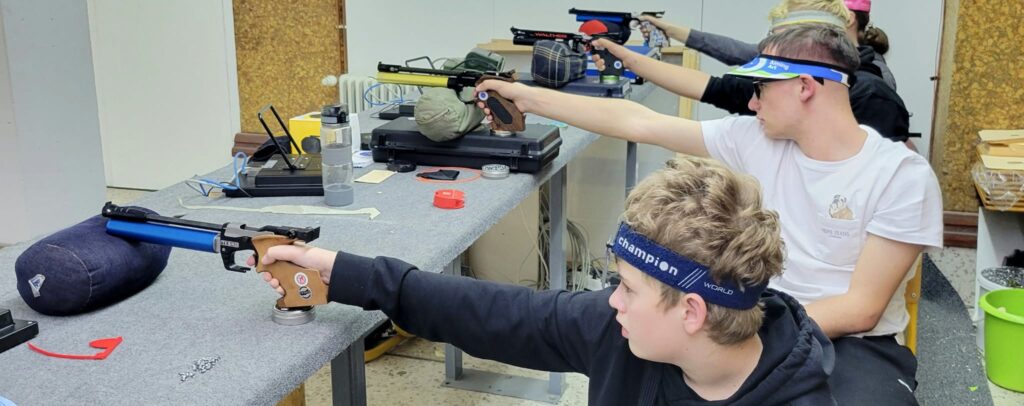
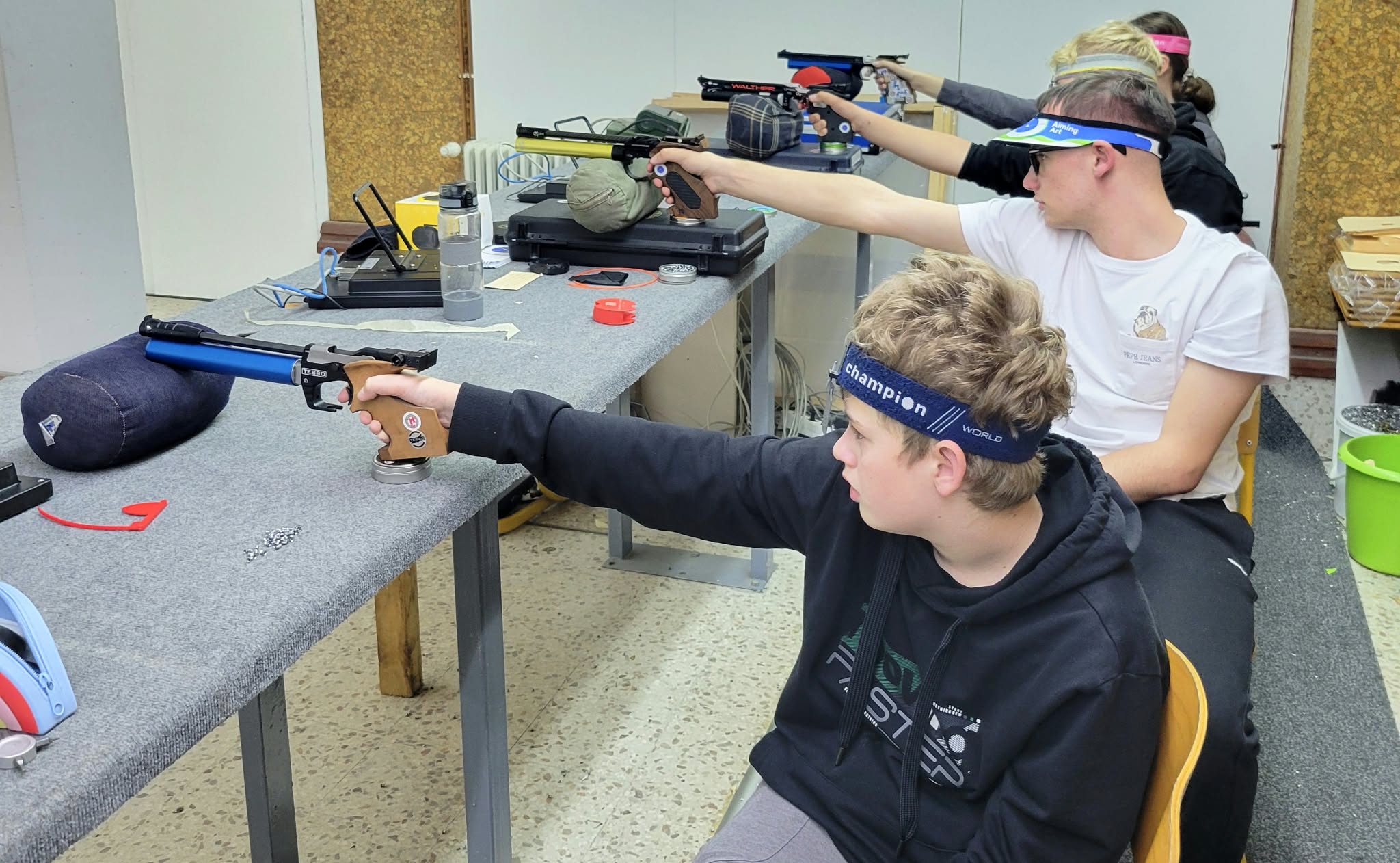
Last weekend, we welcomed another group of young athletes to Aiming Art’s Shooting Academy. After several years of running the Academy, we have learned that some things change every season, and some shooting mistakes stubbornly refuse to disappear.
The good news? Most of them are not complicated. They are simply things young shooters need time, practice, and the right questions to become aware of.
Here are three common mistakes we keep seeing on the shooting range.
1: Knowing the Shot Process Is Not the Same as Preparing for It
By now, most of the young shooters who come to the Academy can explain the basic shot process. They know what they are supposed to do: establish their position, raise the rifle or pistol, approach the target, aim, trigger, follow through – and repeat.
But there is often something missing before all of that starts: preparation.
Too many shooters step onto the firing point and immediately start shooting. There is no real transition between everything that happened before the shot and the moment when they decide: Now I am ready to shoot.
A good pre-shot routine does not have to be long or complicated. It can be as simple as taking a breath, checking your position, clearing your mind of whatever happened before, and consciously deciding what you are about to do.
One simple way of creating this transition is to ask yourself two questions:
Where am I? (Here.)
Where am I going? (To the centre of the target.)
And don’t just answer them in your head. Take a moment to actually look at where you are and feel yourself in your position. Then shift your attention towards where you are going. See the target. Feel the direction of the upcoming shot. Let your attention settle there.
It is a simple way of bringing yourself out of whatever happened five minutes ago, or even five seconds ago, and into the shot that is about to happen. The important part is that it is intentional. Because the shot process starts before the gun comes up.
The better a shooter gets at creating that transition, the easier it is to reproduce the same process in training, in competition, and under pressure.
2: Pistol Shooters Are Looking for an Ideal Picture
This shooting mistake is particularly common among young pistol shooters. They are looking for the perfect sight picture: the moment when everything is completely still, the sights are perfectly aligned, and the only thing left to do is squeeze the trigger.
There is just one problem. That moment probably doesn’t exist. A pistol is going to move. The question is not how to eliminate the movement, but how to understand it. For pistol shooters, it may be more useful to think in terms of an ideal film than an ideal picture.
Instead of looking for one perfect instant, learn to recognise your sights’ movement. Where do they move? How large is the movement? How does it change as you settle? And, most importantly, can you become comfortable shooting within that movement?
The goal is not necessarily to make the pistol completely still. The goal is to make the movement familiar, predictable, and manageable, and to learn to execute the trigger while the sights are floating in your acceptable area.
Once a shooter stops waiting for perfection, a lot of unnecessary tension disappears.
But another problem comes from looking for that perfect picture: When they try to control the picture too much, they often end up controlling the trigger too.
As they wait for the perfect sight picture and then try to fire on command, the trigger has a pretty difficult job to do. The shooter waits for the sights to settle and, when the picture finally looks right, feels that this is the moment to make the shot happen. They then rush it, instead of allowing the triggering to develop naturally as part of the shot process, and that is exactly where triggering often falls apart. And this brings us to the third most common shooting mistake.
3: Triggering Still Needs Work
Even after years of working with young shooters, we still see a lot of unnecessary problems with triggering. And this is understandable. Triggering is difficult to isolate when you are actually shooting. There is the position, the hold, the sights, the target, the shot itself. And then there is the anticipation of what is about to happen.
Sometimes, the easiest way to work on triggering is to take most of those things away. One of our favourite exercises is simple: trigger practice while seated.
With the rifle or pistol safely supported and the shooter seated, there is much less to think about. The focus can be entirely on the triggering movement: the movement of the finger, the direction of the pressure, the smoothness of the release and the absence of unnecessary movement elsewhere in the body. It may not look particularly exciting, but that’s exactly the point.
If you cannot practise a smooth, controlled triggering movement when there is no score on the line, it is hard to expect the same movement to magically appear when you are standing on the firing point, aiming at a target, and thinking about the shot.
Triggering is a skill in its own right, so it deserves to be practised that way. The shot should not feel like a command: “Now!” It should feel like the natural conclusion of the process.
Don’t Just Find the Mistake. Create the Solution
One thing we keep coming back to at the Shooting Academy is that recognising shooting mistakes is only the beginning.
My preparation wasn’t good enough.
My pistol was moving too much.
I pulled the trigger on command.
These observations can be useful, but they are not solutions. We want our athletes to develop a more proactive way of thinking. Instead of simply looking for what went wrong, we encourage them to ask: What can I do differently next time?
That is also one of the ideas behind the Strelski zvezek. They are not just a place to record scores. They are a tool for observing, reflecting and, most importantly, turning observations into action. The goal of training is not to become better at finding shooting mistakes; the goal is to become better at creating solutions. And perhaps that is one of the most important skills we can teach young shooters, one that will stay with them long after they leave the Academy.
More Recent Pointers
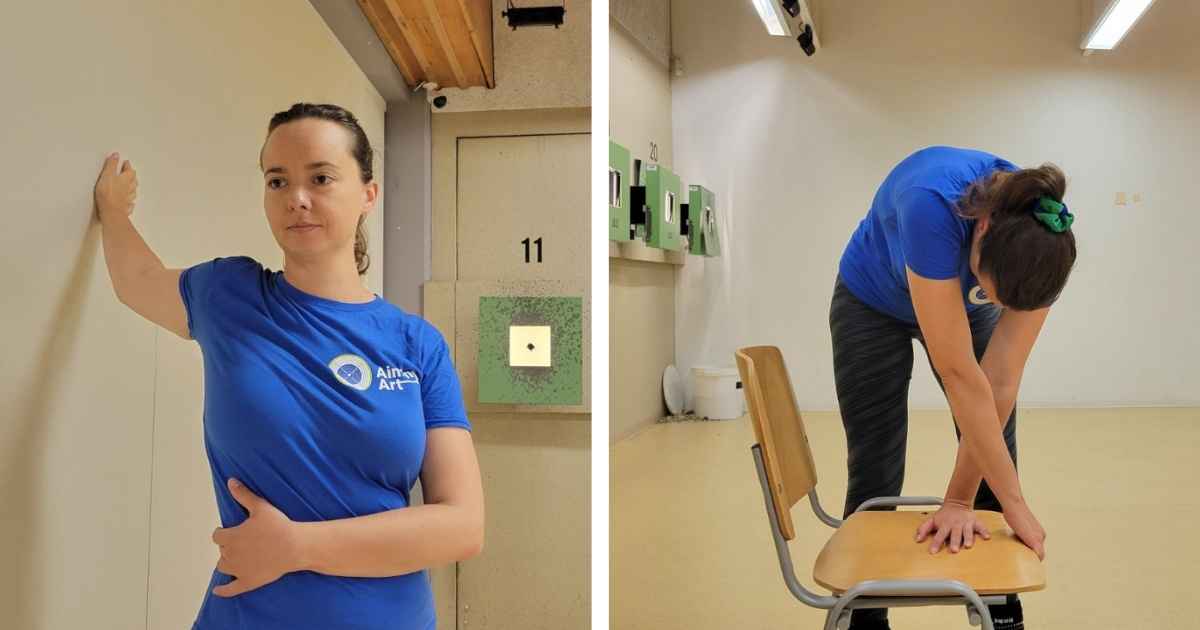
Three simple exercises for shoulder mobility.
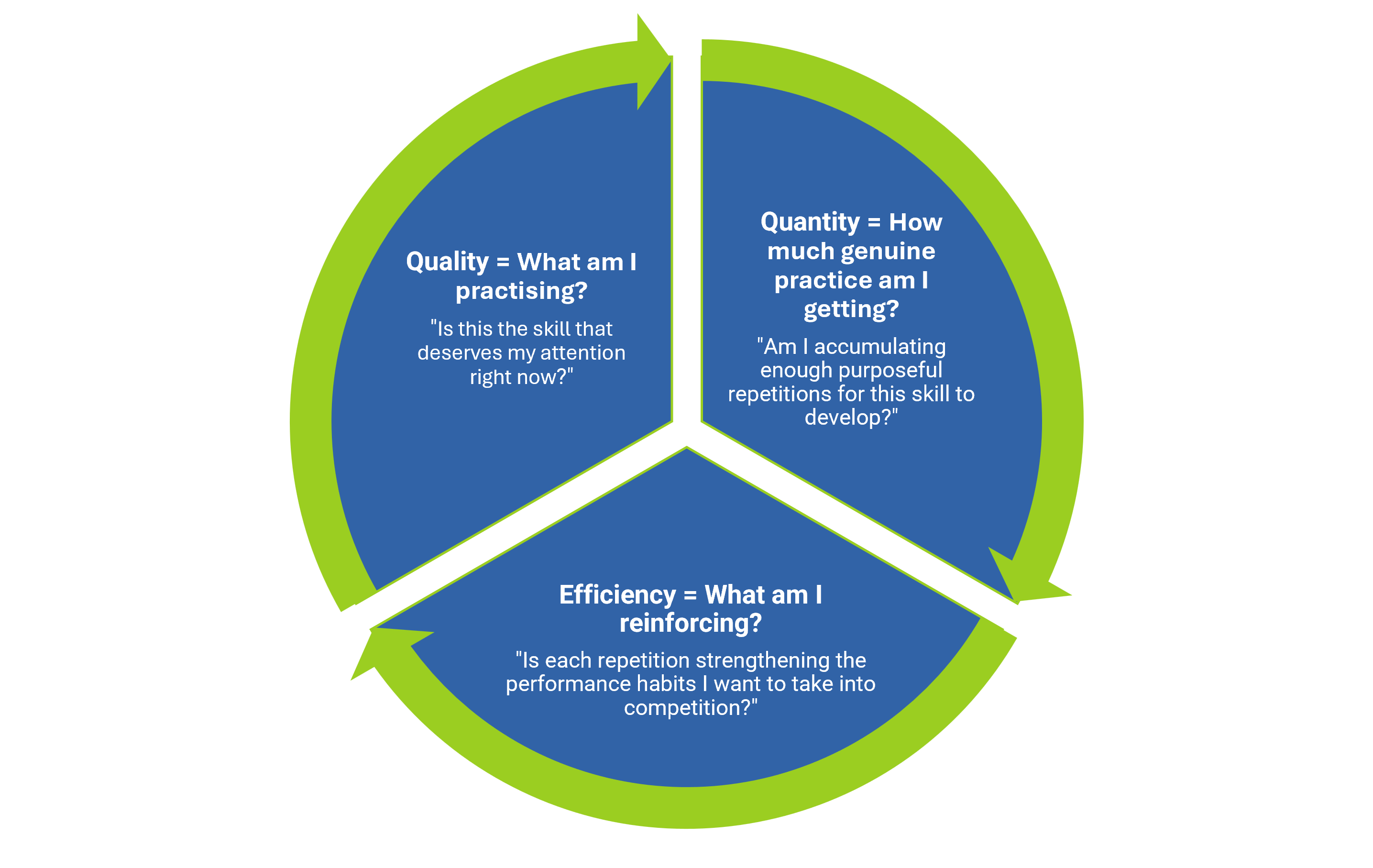
Quality, quantity, and efficiency – three elements that determine whether a shooting practice truly leads to improvement.
S pisanjem strelske analize naj vsak trening šteje. Beleži svoj napredek in opazuj svoje izboljšave.
Bodi med prvimi, ki nekajkrat mesečno prejmejo Strelske namige
in posebne ponudbe!